

OEG — Smart Tutor Finder Mobile App
-
Client
Our Easy Game LLC
-
Role
Product Designer
-
Platform
iOS & Android
-
Rating
4.9 ★ (10K+ Users)
1. The Client
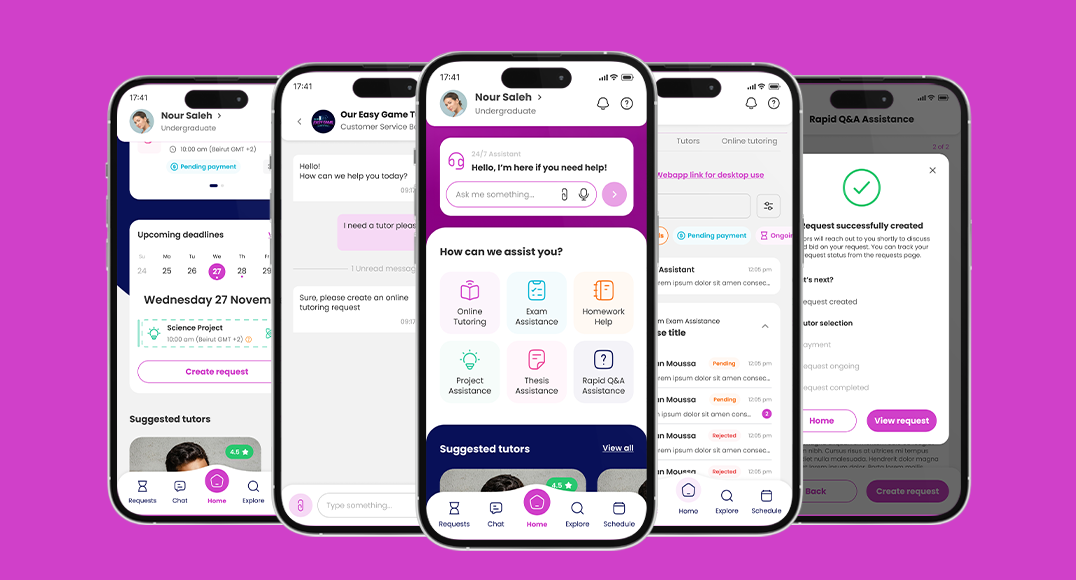
Our Easy Game (OEG) LLC is an on-demand educational technology platform operating on iOS and Android . OEG connects university and high school students directly with verified human tutors for real-time homework assistance, exam preparation, and thesis support, alongside an integrated 24/7 AI-powered study assistant .
2. My Role
Lead Product Designer (End-to-End Execution) — I owned the complete product design lifecycle: user research, information architecture, wireframing, Figma design system creation, high-fidelity UI design, interactive prototyping, usability testing, and front-end developer handoff/QA .
3. Problem Statement
Before OEG, students relied on fragmented WhatsApp groups, direct messaging, and manual coordination to find tutors . This created major operational friction:
- • High User Drop-off: Students abandoned booking attempts due to unorganized messaging and delayed pricing feedback .
- • No Unified Dashboard: Tutors lacked a centralized portal to review incoming requests, submit bids, or manage schedules cleanly .
- • Lack of Instant Support: Students studying late at night had no immediate assistance options when human tutors were offline .
4. Research & Discovery
I conducted qualitative interviews with 15 university students and 6 active private tutors . Students prioritized booking speed, upfront price transparency, tutor rating visibility, and instant solutions . Tutors needed low-friction request scanning, straightforward bidding tools, and predictable session payouts .
5. Information Architecture
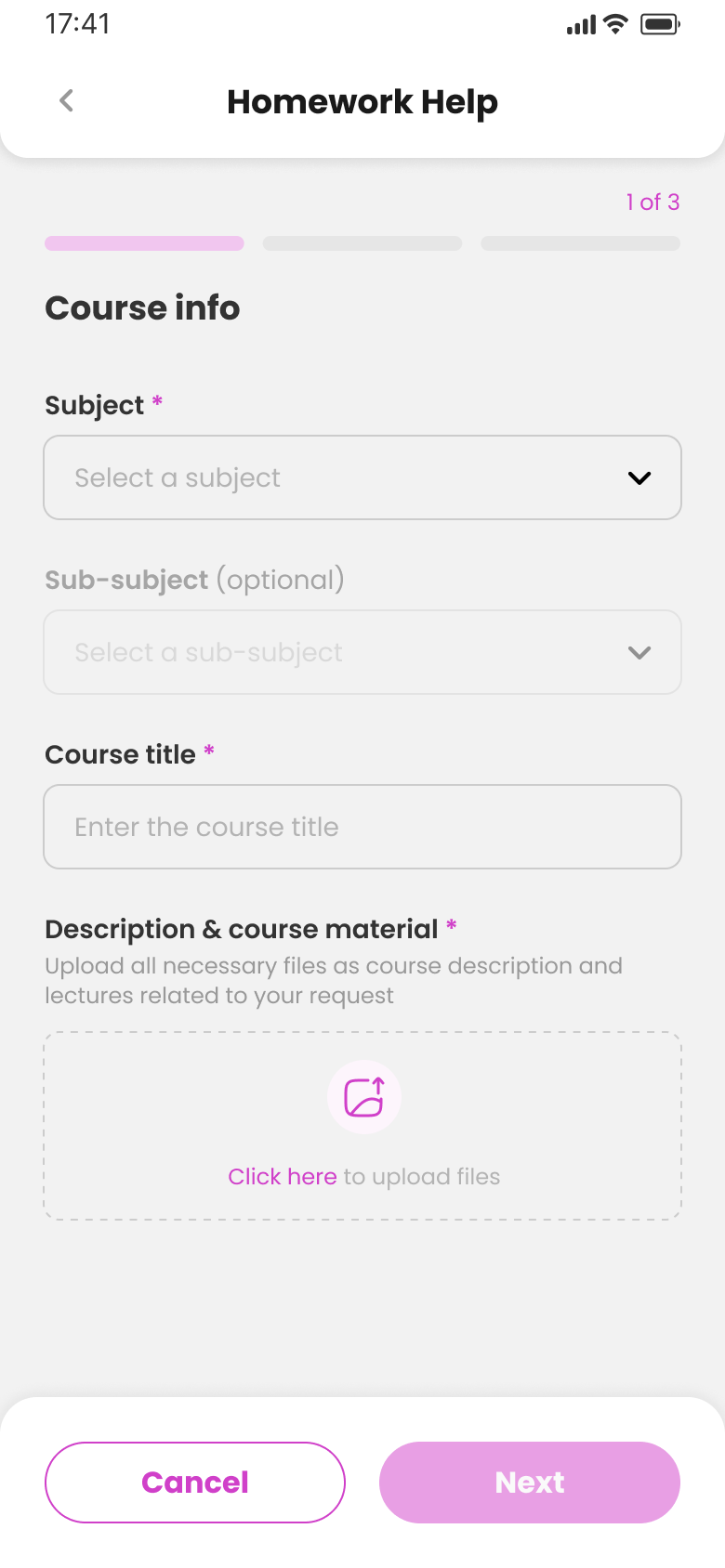
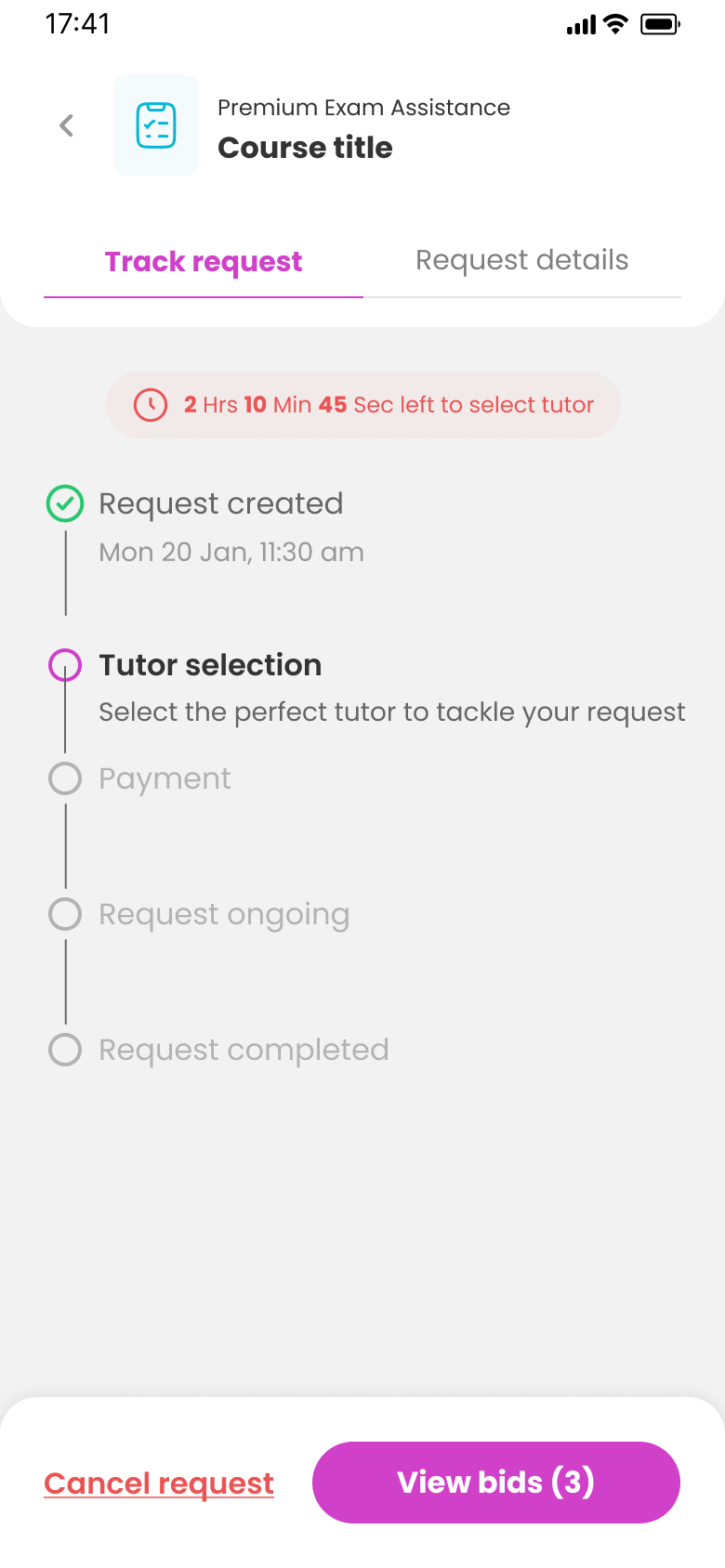
I structured a dual-user ecosystem (Student View & Tutor View) anchored by a linear, transparent booking stepper that eliminated chaotic back-and-forth messaging :
6. Design System Foundations
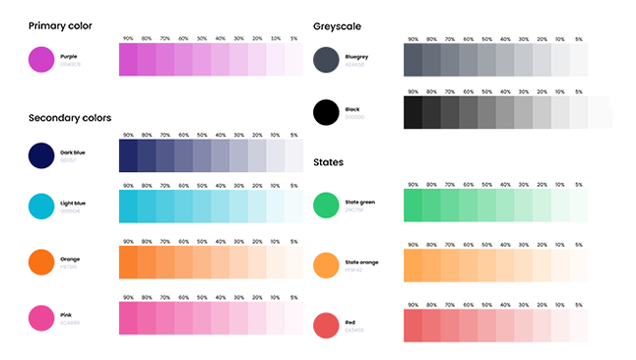
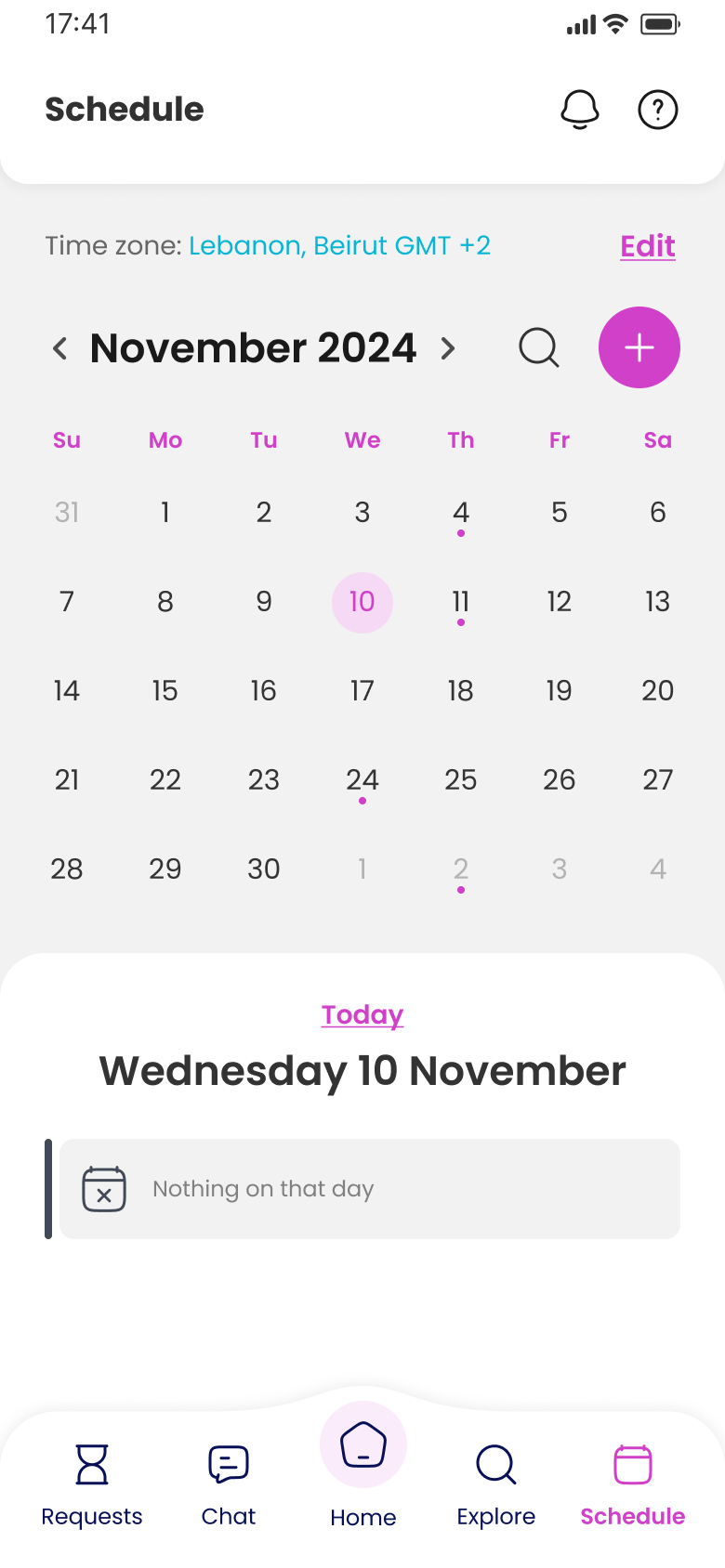
To maintain visual consistency across dozens of screens, I established a comprehensive Figma component design system . The visual identity utilizes deep brand purple (#d040c9) for core navigation surfaces paired with vibrant orange (#FF9800) high-contrast action buttons, using systematic 5% to 90% opacity scales for accessible WCAG AA text contrast .
7. Design Solution
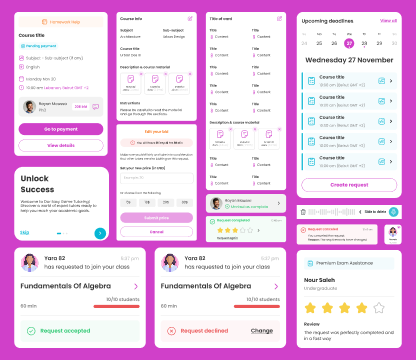
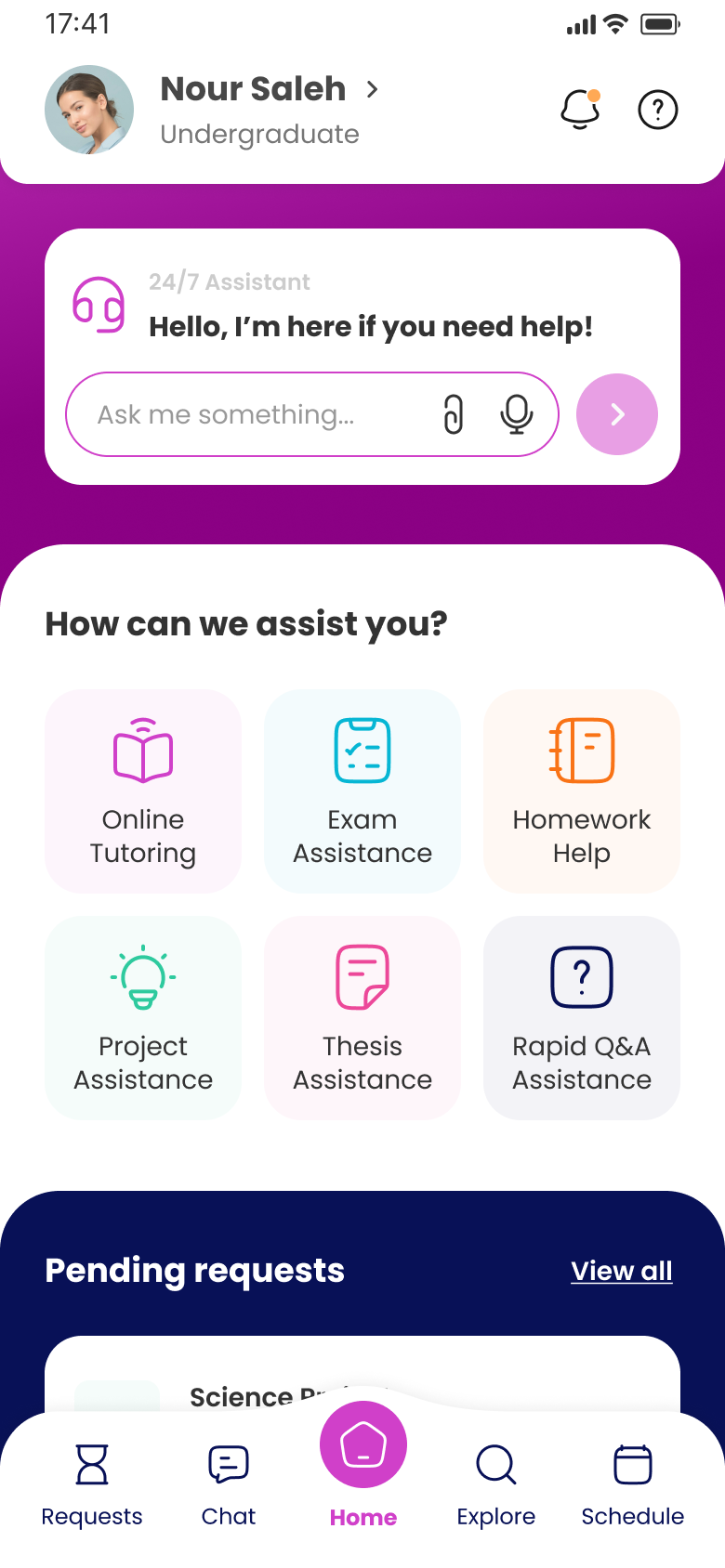
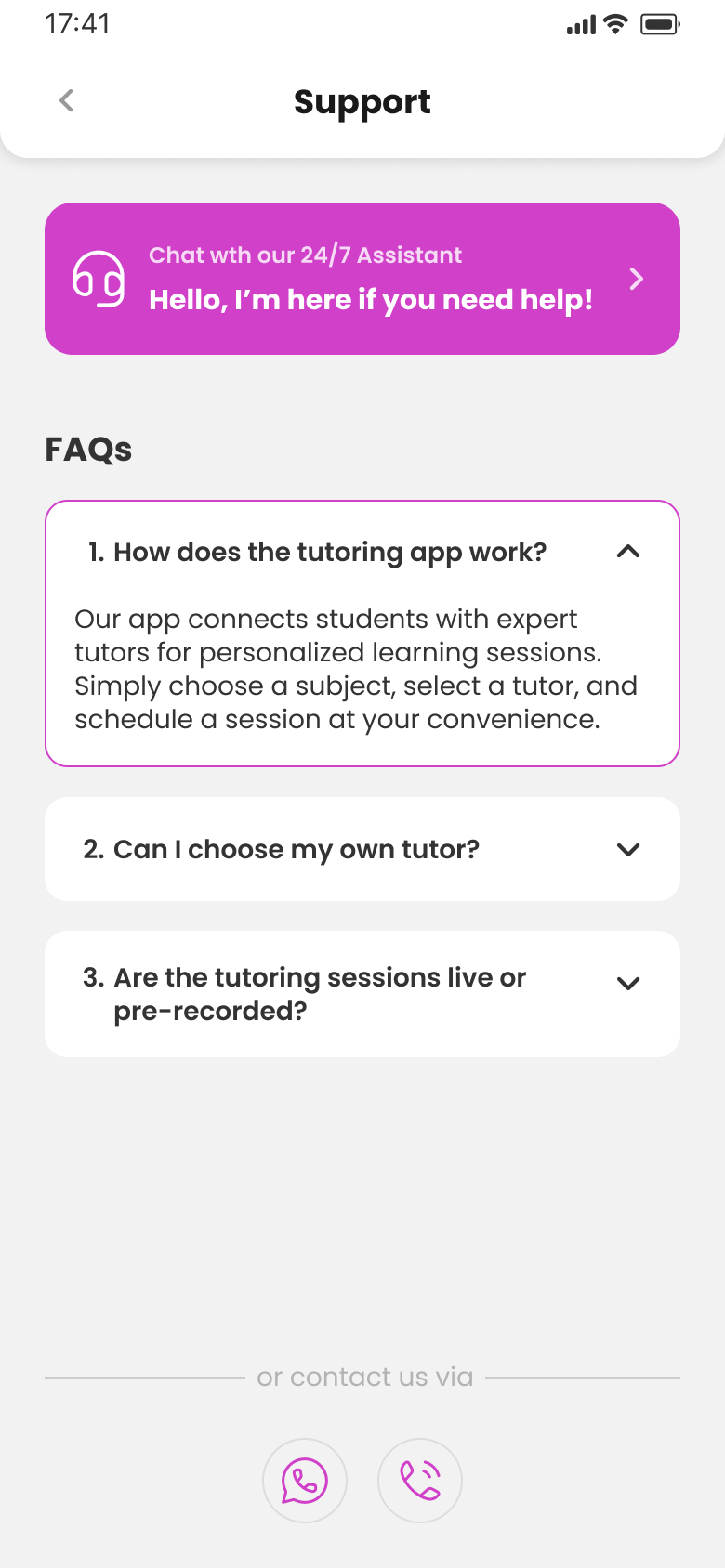
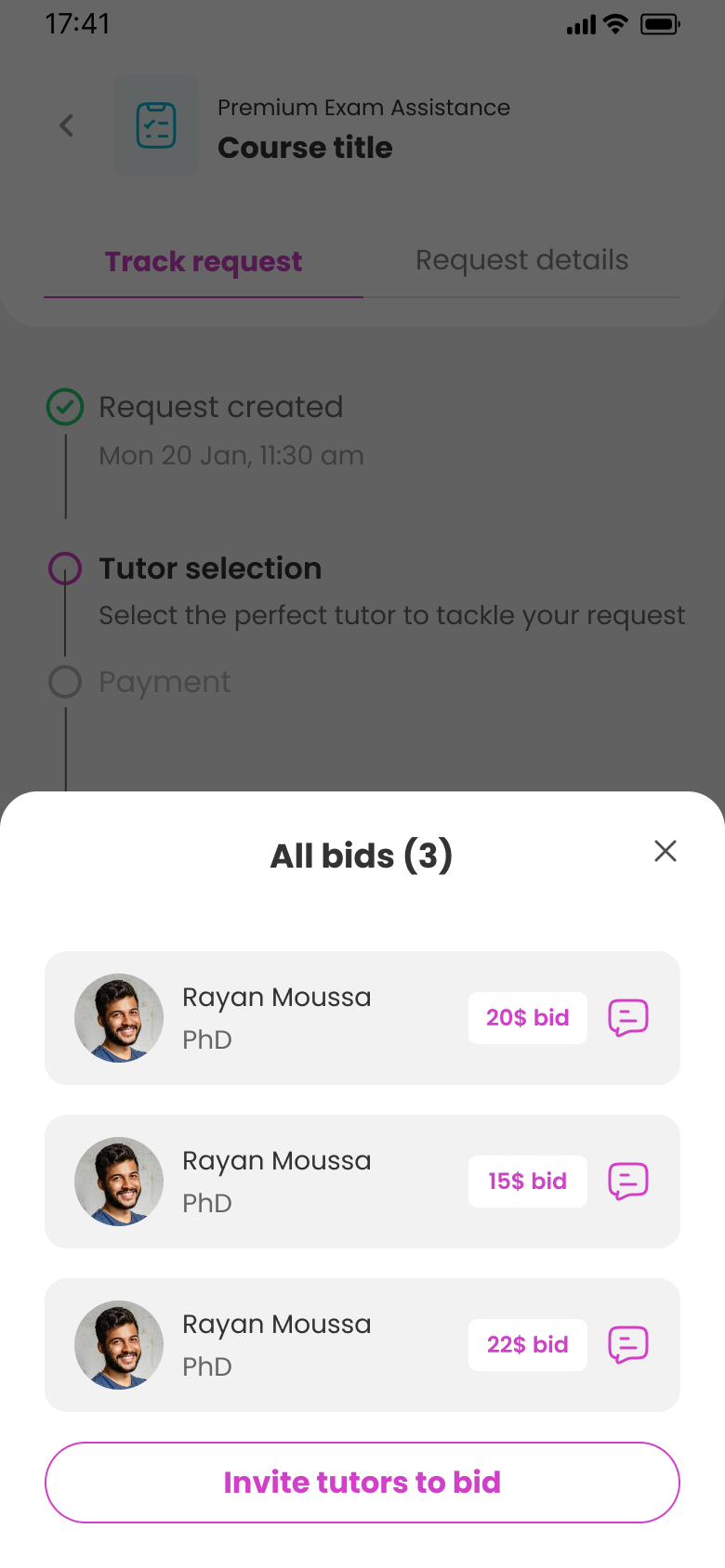
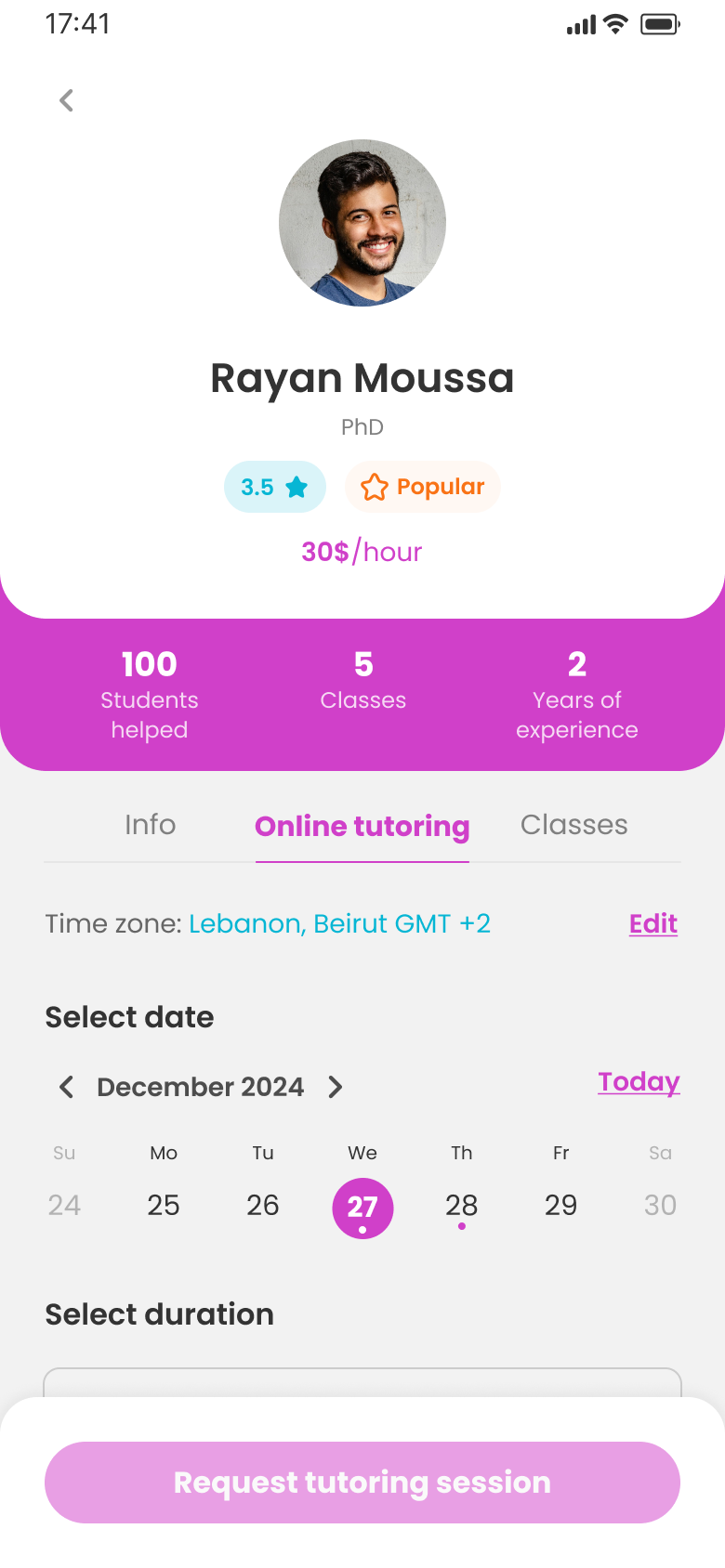
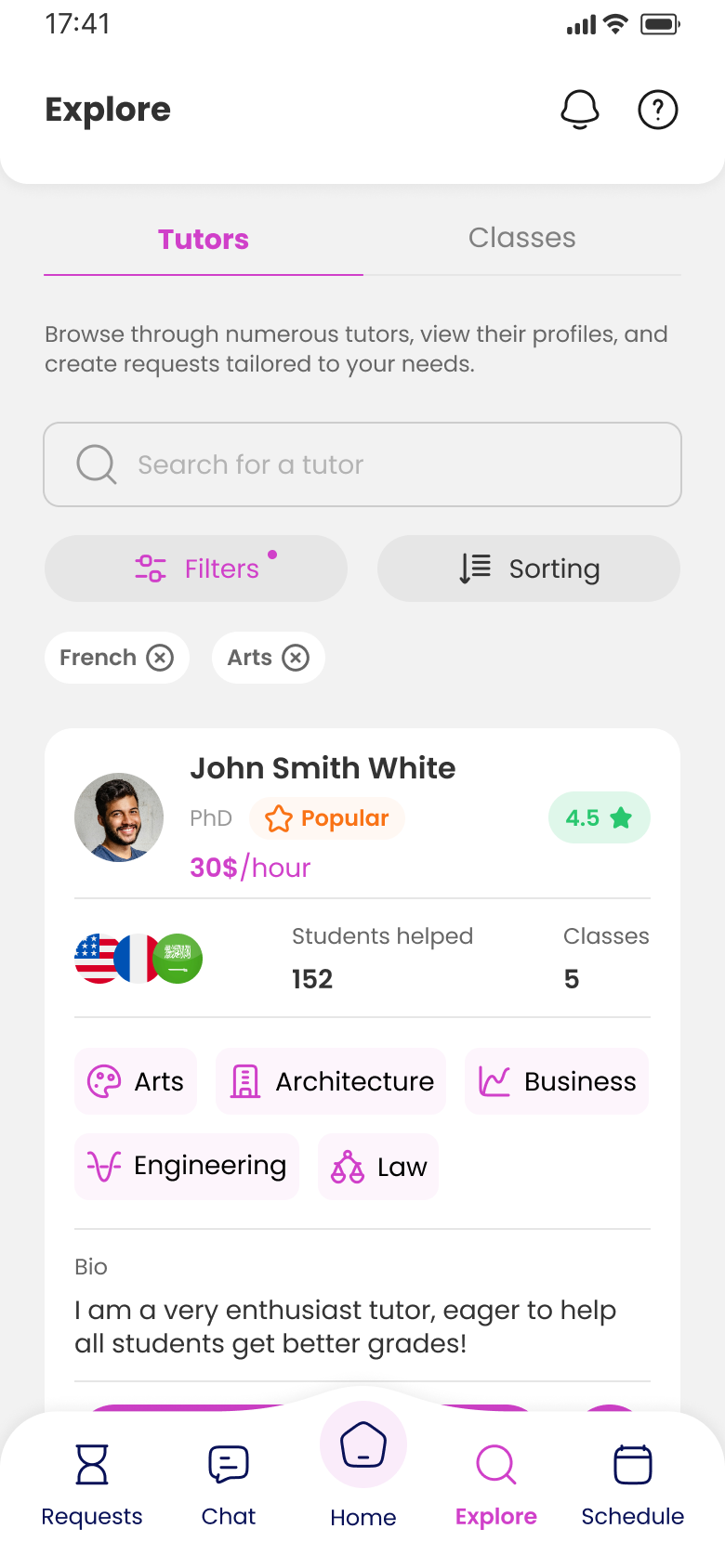
The high-fidelity mobile solution introduced a structured booking stepper, an on-demand 24/7 AI study assistant for instant query resolution, and a transparent bidding portal for certified tutors .
8. Usability Testing
Testing interactive Figma prototypes with 12 target users revealed that students initially struggled to compare tutor bids efficiently . I iterated on the bid card component to chunk tutor ratings, completion history, and pricing into a single visual card, resulting in a 40% faster decision time during follow-up testing .
9. Implementation & Handoff
Leveraging my Computer Science background, I structured Figma component layers to match front-end DOM and Flexbox layout logic, provided explicit interactive state specs, and conducted weekly design QA reviews with engineering leads to ensure 100% design fidelity upon launch .
10. Results & Impact
- 10,000+ Active Student & Tutor Downloads
- 4.9 ★ Rating on Google Play Store
- Dramatic Drop-off Reduction via Structured Stepper Flows
- 24/7 AI-Powered Study Assistant Integration
11. Conclusion & Key Takeaways
OEG demonstrated how replacing fragmented chat channels with structured UX steppers and a scalable Figma design system directly drives platform adoption and user retention while ensuring seamless engineering handoff .